
Is Card Grading Worth It? The Pros and Cons Explained
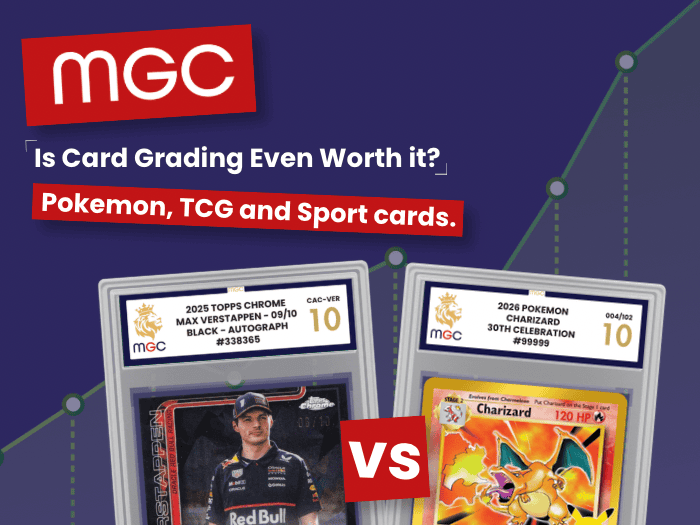
This guide is for Pokémon, sports card and TCG collectors who are considering professional card grading and want to know whether it’s worth the cost.
You’ve pulled a rare Pokémon card, found an old football card in your collection or finally got your hands on that Yu-Gi-Oh! card you’ve wanted for years. Now comes the question: should you get it graded?
Card grading has become a major part of the collecting hobby, with collectors sending everything from vintage classics to modern pulls for professional assessment. But is card grading worth it for every card?
The short answer is no. And that’s not necessarily a bad thing.
Grading can help protect your cards, provide an independent assessment of their condition and potentially increase their resale value. However, there are costs involved, and not every card will benefit financially from being graded.
At Majesty Grading Company (MGC), we believe collectors should understand what they’re getting from the grading process before making a submission.
Let’s explore the advantages, potential disadvantages and how to decide whether grading makes sense for your collection.
What Is Card Grading?
Card grading is the process of having a trading card professionally examined to assess its authenticity and physical condition.
Graders look at characteristics such as centring, corners, edges and surface quality before assigning a numerical grade. The card is then encapsulated in a protective plastic holder, commonly called a slab.
Most major grading companies use a scale from 1 to 10, with higher numbers indicating better overall condition.
For collectors, this provides a more consistent way of understanding a card’s condition than relying solely on descriptions such as ‘mint’ or ‘near mint’.
If you’re completely new to the process, our guide to trading card grading is a useful starting point.
What Are the Benefits of Card Grading?
There are several reasons collectors choose to get cards graded. Some are financial, while others are about preservation, presentation or simply enjoying the hobby.
1. Protecting Your Cards for the Future
One of the biggest advantages of grading is protection.
Trading cards are vulnerable to damage, particularly when they’re frequently handled, transported or stored incorrectly. Even minor scratches, corner wear or dents can affect a card’s condition.
Once graded, a card is encapsulated inside a protective holder that helps reduce the risk of damage from everyday handling.
This can be particularly worthwhile for valuable vintage cards, rare modern pulls or cards with sentimental value.
Perhaps you’ve kept a favourite Pokémon card since childhood, own a football card signed by your favourite player or have a Magic: The Gathering card that marks an important moment in your collecting journey.
Sometimes, protecting the card is reason enough to grade it.
2. Potentially Increasing a Card’s Resale Value
One of the main reasons people consider professional grading is the possibility of increasing a card’s market value.
In some cases, a high-grade card can sell for considerably more than an equivalent ungraded copy.
This is particularly relevant for cards where condition plays a major role in collector demand.
However, there are a few important things to remember:
- Not every graded card is worth more than its ungraded equivalent.
- The grade achieved can significantly influence resale value.
- Demand for individual cards changes over time.
- Different grading companies can achieve different resale prices for comparable cards.
- Grading costs need to be considered when calculating potential profit.
For anyone grading primarily to sell, researching completed sales of similar cards is an important first step.
3. Providing an Independent Assessment of Condition
When buying an ungraded card, you’re often relying on photographs and the seller’s description of its condition.
One person’s idea of ‘mint’ might be very different from another’s.
Professional card grading provides an independent assessment using established grading criteria.
This can help buyers make more informed decisions and give sellers a clearer way to communicate a card’s condition.
It’s particularly useful when dealing with expensive cards, where even small differences in condition can affect value.
4. Making Your Collection Look Better
Let’s be fair, graded cards can look fantastic.
There’s something satisfying about seeing your favourite cards displayed in matching slabs, complete with their identification labels and grades.
For collectors building a personal collection, often called a PC, presentation can be just as important as financial value.
Some collectors aim to complete entire graded sets. Others focus on their favourite Pokémon, football team, player or TCG characters.
Whether you’re displaying a single centrepiece card or an entire shelf of graded collectables, professional encapsulation can make your collection feel more complete.
5. The Excitement of the Grading Reveal
Anyone who’s submitted cards for grading knows that waiting to discover the results can be part of the fun.
Will that pack-fresh Pokémon card achieve a 10? Will your vintage sports card grade higher than expected?
Opening a completed grading submission can bring back some of the excitement of opening trading card packs.
For many collectors, that experience is a big part of why they keep coming back to grading.
What Are the Disadvantages of Card Grading?
While there are plenty of reasons to grade your cards, it’s important to understand the potential downsides too.
1. Card Grading Costs Money
Every grading submission comes with a cost.
The total card grading cost depends on factors such as the grading company, service level, number of cards and any applicable delivery charges.
If you’re submitting an inexpensive card purely to increase its resale value, grading fees could outweigh any additional value achieved.
For example, imagine you own an ungraded card worth approximately £15. If the card sells for £25 after grading, but grading and associated costs total £15, you’ve spent more than the potential increase in value.
That’s why it’s worth looking at the numbers before submitting cards purely for profit.
MGC offers grading options for different collecting needs, including membership benefits for collectors who submit regularly.
2. A High Grade Isn’t Guaranteed
One of the biggest misconceptions in trading card grading is that a brand-new card should automatically receive a perfect 10.
Unfortunately, that’s not how grading works.
Cards can leave the factory with imperfections such as off-centre printing, rough edges, print lines or minor surface defects.
Even a card pulled directly from a sealed pack might not achieve the grade you were hoping for.
If you’re grading with resale value in mind, it’s important to consider what the card might be worth at several different grades, rather than assuming the best possible result.
3. Grading Takes Time
Professional grading isn’t an instant process.
Cards need to be received, assessed, graded, encapsulated and prepared for return.
Turnaround times vary depending on the company, service level and workload.
This is particularly important for collectors looking to sell cards while demand is high. A delay could mean missing an opportunity if market interest changes before the card is returned.
As a UK-based grading company, MGC offers collectors an alternative to submitting cards overseas, helping them avoid the additional complications of international shipping.
4. Not Every Card Benefits from Being Graded
Some cards simply don’t have enough market demand to justify grading for financial reasons.
A common modern card with visible damage, for example, might have very little resale potential even after professional grading.
That doesn’t mean you shouldn’t grade it. If it’s a personal favourite, the sentimental value could easily outweigh the financial considerations.
But if your goal is profit, being selective about which cards you submit is usually the more sensible approach.
Does Grading Increase the Value of Trading Cards?
It can, but the outcome depends on several factors.
A rare, desirable card in excellent condition may command a premium when professionally graded. Buyers may be willing to pay more for the additional information about its condition and authenticity.
However, the relationship between grading and value isn’t always straightforward.
Consider three hypothetical copies of the same trading card:
- Ungraded copy: Sells for £100.
- Graded copy achieving a high grade: Sells for £160.
- Graded copy achieving a lower grade: Sells for £80.
These figures are illustrative rather than actual market prices, but they demonstrate an important point: grading doesn’t guarantee a financial return.
For collectors looking to make money from buying and selling cards, it’s worth considering the potential outcomes before making a submission.
Remember to account for grading fees, delivery costs, selling fees and the time involved.
Which Trading Cards Are Worth Grading?
There isn’t a definitive list of cards that should always be graded, but certain types are particularly worth considering.
Rare and Valuable Cards
Cards with established collector demand are often strong candidates for grading.
These might include rare Pokémon cards, limited-edition sports cards, desirable rookie cards or scarce TCG releases.
Condition can make a substantial difference to the market value of these cards, making professional assessment especially relevant.
Vintage Trading Cards
Older trading cards can be particularly interesting to grade because finding well-preserved examples becomes increasingly difficult over time.
Vintage Pokémon, Yu-Gi-Oh!, Magic: The Gathering and sports cards may have experienced years of handling and storage.
Even when a vintage card doesn’t achieve a particularly high grade, professional encapsulation can still be valuable for preservation and presentation.
Cards in Excellent Condition
If a card has sharp corners, clean edges, good centring and an excellent surface, it may be a suitable grading candidate.
However, visually inspecting a card at home can’t guarantee a particular grade.
Some imperfections are difficult to identify without specialist examination.
Cards with Sentimental Value
Not every grading decision needs to be based on money.
A childhood favourite, a special birthday pull or a card connected to a memorable sporting moment might be worth grading simply because it matters to you.
For many collectors, those are the cards they’ll never want to sell anyway.
Is Pokémon Card Grading Worth It?
Pokémon card grading is popular among collectors interested in both vintage and modern cards.
For vintage collectors, grading can help establish the condition of older cards and preserve examples that may be difficult to replace.
Modern collectors might be interested in grading special illustration rares, popular characters or particularly desirable pulls.
However, it’s worth remembering that not every modern Pokémon card will increase in value after grading.
Cards with high supply or limited demand may offer little financial benefit, especially if they receive lower grades.
Before submitting, consider the card’s rarity, condition, recent selling prices and your reason for grading.
For collectors interested in professional Pokémon card grading, MGC offers a UK-based service covering Pokémon and other supported trading card games.
Is Sports Card Grading Worth It?
Sports card grading can be worthwhile for collectors of football, basketball and other sporting collectables.
Rookie cards, limited-edition releases, autographs and cards featuring highly sought-after players are often considered for grading.
Condition is particularly important when comparing cards from the same release.
However, sports card values can be influenced by factors beyond condition, including player performance, popularity and wider collector demand.
If you’re grading a modern sports card with the intention of selling it, consider whether the player is attracting sustained interest or whether demand might change quickly.
MGC’s sports card grading service provides collectors with a UK-based option for protecting and assessing their cards.
Is Grading Yu-Gi-Oh!, Magic: The Gathering and Other TCG Cards Worth It?
Absolutely, depending on the card and your collecting goals.
Yu-Gi-Oh! collectors might consider grading early printings, rare editions, iconic monsters or cards with personal significance.
Magic: The Gathering collectors may be interested in preserving older cards, scarce releases or particularly desirable collectables.
Other trading card games also have dedicated collecting communities, with demand varying between individual cards and releases.
As with Pokémon and sports cards, the key is understanding whether you’re grading for preservation, display, resale or a combination of these reasons.
It’s also worth considering whether you intend to play with the card. Once encapsulated, a graded card can no longer be used in normal gameplay without removing it from its protective holder.
When Might Card Grading Not Be Worth It?
There are situations where keeping a card ungraded could be the better choice.
- The card has very little resale value: Grading costs may exceed any potential increase in price.
- The card has significant damage: A lower grade may limit its appeal to buyers, although preservation could still be worthwhile.
- You need to sell immediately: Grading turnaround times might not suit your plans.
- You regularly use the card for gameplay: Encapsulation makes it impractical to use in a deck.
- You’re expecting a guaranteed profit: Grading involves uncertainty, particularly when the final grade is unknown.
Ultimately, grading should support your collecting goals rather than feel like something you have to do with every card.
Why Choose MGC for Card Grading?
If you’ve decided that grading is right for your collection, the next step is choosing a grading company.
Majesty Grading Company is a UK-based professional grading company specialising in trading cards and other collectables.
We work with collectors at every level, from first-time submitters to experienced hobbyists who regularly send batches of cards for grading.
Here’s what makes MGC an appealing choice:
- UK-based service: Avoid the additional complications of sending cards overseas for grading.
- Fast turnaround: MGC focuses on efficient grading and clear service expectations.
- High-quality encapsulation: Protect your cards and give your collection a professional appearance.
- Clear communication: Stay informed throughout the grading process.
- Flexible submission options: Submit directly or through participating local card shops.
- Membership benefits: Regular collectors can explore discounts and other advantages through MGC Membership.
If you’re planning to get cards graded regularly, take a look at MGC Membership to see how it could benefit your collecting hobby.
Frequently Asked Questions About Card Grading
Is It Worth Grading Cheap Pokémon Cards?
It depends on your reason for grading.
If you’re hoping to make a profit, grading an inexpensive card may not be financially worthwhile. However, if it’s a favourite card or part of a personal collection, grading can still be a great way to preserve and display it.
Should I Grade My Cards Before Selling Them?
Not necessarily.
Compare recent selling prices for ungraded copies and graded examples at different grades. Consider grading fees, selling costs and the possibility of receiving a lower grade than expected.
For some cards, selling ungraded may be the more profitable option.
Can Grading Reduce a Card’s Value?
Yes, in some circumstances.
If a card receives a lower grade than buyers expected, its market value could be lower than the price an ungraded example might achieve.
Grading also introduces costs that can reduce or eliminate any potential profit.
Is a Grade 9 Still Good?
Generally, yes. A grade 9 represents a card in excellent overall condition under many commonly used grading systems.
However, the difference in market value between a 9 and a 10 can sometimes be substantial, particularly for highly sought-after modern cards.
Is It Better to Grade Cards in the UK?
Using a UK-based grading company can offer practical advantages for UK collectors, including avoiding international shipping, customs complications and overseas submission processes.
However, collectors should also consider grading standards, service costs, turnaround times, presentation and the resale market for their particular cards.
How Do I Get My Trading Cards Graded with MGC?
You can start by choosing the cards you’d like to submit and reviewing MGC’s available grading services.
Once you’ve selected the appropriate service, follow the submission instructions to arrange grading.
If you’d rather submit through a participating local card shop, explore MGC’s Local Submission Hubs.
So, Is Card Grading Worth It?
For many collectors, yes. But the real answer depends on what you want from the experience.
If you’re grading purely for profit, you’ll need to weigh up the card’s potential value against grading costs, market demand and the grade it might achieve.
If you’re grading to protect a treasured card, complete a collection or enjoy the excitement of a grading reveal, the decision is much more personal.
There’s no requirement for every card in your collection to be graded, and there’s certainly nothing wrong with keeping some cards raw.
The best approach is to be selective, understand your goals and choose a grading service that suits your needs.
Ready to Grade Your Cards with MGC?
Whether you’ve got a rare Pokémon pull, a valuable sports card or a sentimental favourite you’ve been holding onto for years, MGC can help you take the next step.
With professional grading, high-quality encapsulation and a UK-based service designed for collectors, we’re here to help you get more from your collection.




MGC Membership Club
Submit 5 cards every month for the price of 3! Plus added benefits!
Find out more
Local Submission Hubs
Find the nearest submission hub to you! Search by post code.
Find a submission hub
Premium Collector Consultation
Book a consultation with a grading expert to review your collection.
BOOK PREMIUM COLLECTOR CONSULTATION