
What Is Trading Card Grading and How Does It Work?
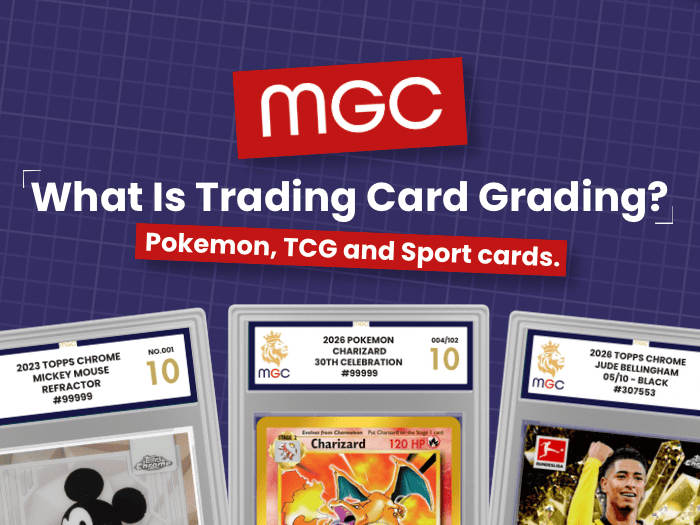
This guide is for anyone new to trading card grading, whether you’re collecting Pokémon, Yu-Gi-Oh!, Magic: The Gathering, sports cards or other TCGs.
Ever wondered why two seemingly identical trading cards can have completely different values? Or why collectors get so excited about a Gem Mint 10? A lot of it comes down to card grading.
Trading card grading is a way of professionally assessing a card’s condition, authenticating it and preserving it in a protective case. It’s become a huge part of the collecting hobby, but if you’ve never had a card graded before, the process might seem a little confusing.
In this guide, we’ll explain exactly what card grading is, how it works, what graders look for and how you can get your own trading cards graded with Majesty Grading Company (MGC).
What Is Trading Card Grading?
Trading card grading is the process of having a card professionally examined to assess its authenticity and physical condition. Once assessed, an eligible card is assigned a numerical grade and encapsulated in a protective plastic case, commonly known as a slab.
At MGC, we grade a wide variety of collectable cards, including Pokémon, sports cards and cards from popular trading card games.
The grading process gives collectors an independent assessment of their card’s condition. Rather than relying on a seller’s description of a card as ‘mint’ or ‘near mint’, collectors can refer to an established grading scale.
For many collectors, though, grading isn’t just about condition or value. It’s also about protecting a favourite card, creating a collection that looks fantastic on display and enjoying the excitement of seeing what grade a card achieves.
Why Do People Get Trading Cards Graded?
There are several reasons why collectors choose professional card grading services. Some are interested in potential resale value, while others simply want to preserve cards that mean something to them.
1. Protecting Valuable or Sentimental Cards
Trading cards can be surprisingly delicate. Even when handled carefully, they’re vulnerable to scratches, corner wear, bending and other damage.
Once a card has been graded, it’s sealed inside a protective holder that helps safeguard it against everyday handling and environmental exposure.
This can be especially appealing for older cards, rare pulls or cards with sentimental value. Perhaps it’s the Charizard you pulled as a child, a signed football card or the centrepiece of your Magic: The Gathering collection.
Not every card needs to be worth hundreds of pounds to deserve protection.
2. Understanding a Card’s Condition
Two copies of the same card might look identical at first glance, but closer inspection can reveal important differences.
One might have slightly worn corners. Another could have a tiny surface scratch that’s almost impossible to spot without proper lighting.
Professional grading provides a consistent way to assess these differences, helping collectors better understand the condition of their cards.
3. Potentially Increasing Resale Value
Some graded trading cards sell for significantly more than their ungraded equivalents, particularly when they achieve high grades.
However, grading doesn’t automatically make a card more valuable. The result depends on factors such as rarity, demand, condition, the grade achieved and the grading company.
It’s worth researching recent sales of comparable cards before deciding whether grading makes financial sense.
4. Building a Better-Looking Collection
There’s something satisfying about a collection of graded cards displayed together.
Matching slabs, clearly labelled cards and a consistent presentation can transform a collection, whether it’s displayed on shelves, stored in a specialist case or brought out to share with other collectors.
For dedicated hobbyists, the presentation is often just as important as the grade itself.
How Does Trading Card Grading Work?
Although the finer details vary between grading companies, the basic process is relatively straightforward.
Here’s what you can expect when submitting your cards for grading with MGC.
Step 1: Choose the Cards You Want Graded
First, decide which cards you’d like to submit.
You might have a valuable vintage Pokémon card, a modern football rookie card or a favourite Yu-Gi-Oh! card that you’d like to preserve.
Before submitting, inspect each card carefully. Look for visible wear, scratches, dents and other imperfections that could influence the final grade.
Remember, even cards pulled straight from a brand-new pack aren’t guaranteed to achieve a perfect grade. Manufacturing imperfections can exist before a card has ever been handled.
Step 2: Submit Your Cards to MGC
Once you’ve chosen your cards, the next step is arranging your grading submission.
MGC offers UK collectors a straightforward way to submit trading cards for professional grading, without needing to send their collections overseas.
You can begin through our online submission process.
For collectors who prefer dealing with a familiar local business, MGC also offers Local Submission Hubs through participating card shops.
Step 3: Your Cards Are Professionally Assessed
Once your cards reach the grading stage, they’re examined to assess their condition and suitability for grading.
Professional graders consider several important characteristics, including centring, corners, edges and surface condition.
Even tiny imperfections can affect a card’s final grade, which is why professional assessment involves much more than simply checking whether a card looks clean.
Step 4: A Grade Is Assigned
Following assessment, a card that meets the grading requirements receives a numerical grade reflecting its overall condition.
The higher the grade, the better the assessed condition of the card.
A card receiving a 10 is considered to be in exceptional condition under the grading company’s criteria, while lower grades reflect increasing levels of wear or imperfections.
Step 5: Your Card Is Encapsulated
After grading, the card is encapsulated in a protective holder, commonly referred to as a slab.
The holder includes a label identifying the card and displaying its grade.
Encapsulation provides protection and makes the card easier to display, organise and identify within a collection.
Step 6: Your Graded Cards Are Returned
Once the grading and encapsulation process is complete, your cards are prepared for return.
For many collectors, this is the best part of the experience.
Opening a completed grading submission, seeing your cards in their new slabs and discovering their grades can be just as exciting as opening a fresh pack of trading cards.
What Do Trading Card Graders Look For?
When assessing a trading card, graders examine several characteristics that influence its overall condition.
Understanding these can help you make more informed decisions about which cards to submit.
Centring
Centring refers to how evenly the card’s printed design is positioned within its borders.
Ideally, the design should be well balanced, with consistent borders on opposite sides.
Some cards leave the factory with noticeably uneven centring, even if they’ve never been handled. This can affect their grading potential.
Corners
Corners are particularly vulnerable to damage.
Graders look for imperfections such as whitening, rounding, bends and other signs of wear.
Sharp, clean corners are generally associated with higher-condition cards.
Edges
The edges of a trading card can reveal damage that isn’t immediately noticeable when looking at the front.
Common issues include whitening, chipping, rough cuts and wear caused by handling or storage.
Edge quality is particularly important when examining older cards that may have been handled extensively over the years.
Surface
Surface condition covers imperfections on the front and back of a card.
These might include scratches, print lines, dents, scuffs, stains or other visible defects.
Some surface imperfections are extremely subtle, which is why a card that looks perfect inside a sleeve might not receive the grade its owner expects.
Understanding Trading Card Grades
Most major trading card grading companies use a numerical grading system, typically running from 1 to 10.
Although exact grading standards and terminology vary between companies, the general principle is that higher numbers represent better condition.
- Grade 10: Exceptional condition, meeting the grading company’s highest standard.
- Grades 8-9: High-condition cards that may have relatively minor imperfections.
- Grades 5-7: Cards showing more noticeable imperfections or wear.
- Grades 1-4: Cards with increasingly significant condition issues.
These descriptions are a simplified introduction rather than MGC’s complete grading criteria. A card’s final grade depends on the applicable grading standards and the combination of imperfections identified during assessment.
It’s also important to understand that a lower grade doesn’t necessarily make a card undesirable.
A rare vintage card with noticeable wear might still be highly sought after, while a common modern card in excellent condition may have relatively modest market value.
What Types of Trading Cards Can MGC Grade?
MGC provides professional grading for a wide range of collectable cards, helping collectors across different hobbies protect and present their collections.
Pokémon Cards
From vintage Base Set favourites to modern special illustration rares, Pokémon cards are among the most recognisable collectables in the trading card hobby.
Collectors grade Pokémon cards for many reasons, including preservation, resale, display and the excitement of chasing a high grade.
Find out more about Pokémon and TCG card grading with MGC.
Sports Cards
Sports card collecting covers everything from vintage football legends to modern rookie cards, autographs and limited-edition releases.
Grading can help collectors document the condition of important cards and protect memorable pieces of sporting history.
Explore MGC’s sports card grading services.
Yu-Gi-Oh! Cards
Yu-Gi-Oh! collectors often have strong attachments to iconic monsters, rare editions and cards they’ve owned since childhood.
Whether it’s a treasured Blue-Eyes White Dragon or a modern collector’s rarity, grading can be a great way to preserve a favourite card.
Magic: The Gathering Cards
Magic: The Gathering has a long collecting history, with everything from early printings to rare promotional cards attracting dedicated collectors.
For cards with historical, sentimental or financial significance, professional grading offers a way to assess condition and preserve them for the future.
Other Trading Card Games
The TCG hobby extends well beyond the biggest names.
MGC also caters for collectors of other supported trading card games, giving enthusiasts more opportunities to grade cards from their favourite franchises.
Collectors with unusually sized cards can also explore MGC’s large and oversized trading card grading service.
Is Trading Card Grading Worth It?
Whether grading is worthwhile depends on what you want to achieve.
If you’re hoping to sell a card for a profit, you’ll need to consider its potential graded value, the cost of grading and the likelihood of achieving a particular grade.
For example, grading a common modern card with visible wear might not make financial sense if your only goal is resale.
But if that same card is your favourite pull, has sentimental value or completes a collection, grading could still be worthwhile to you.
There isn’t a universal rule that says only expensive cards should be graded.
Some collectors focus on rare, high-value cards. Others grade entire sets, favourite characters, memorable sporting moments or cards they’ve kept since childhood.
The important thing is understanding why you want to grade your cards before making a submission.
Why Choose MGC for Trading Card Grading?
Choosing a grading company is an important decision, particularly when you’re submitting cards that have financial or sentimental value.
Majesty Grading Company is a UK-based grading company specialising in trading cards and other collectables.
Our services are designed around the needs of collectors, from complete beginners submitting their first card to experienced hobbyists managing larger collections.
There are several reasons collectors choose MGC:
- UK-based grading: No need to send your cards to an overseas grading company.
- Fast turnaround: MGC focuses on providing an efficient grading service with clear turnaround expectations.
- Professional presentation: High-quality encapsulation helps protect cards while making collections look fantastic.
- Clear communication: Keeping collectors informed is an important part of the MGC experience.
- Flexible submission options: Collectors can submit directly or use participating local submission locations.
- Options for regular collectors: MGC’s membership programme offers benefits for hobbyists who grade cards frequently.
For collectors who regularly submit cards, our MGC Membership is also worth exploring.
Frequently Asked Questions About Trading Card Grading
Can You Grade a Card That Has Been Damaged?
Cards with scratches, whitening, corner wear and other imperfections can often still be graded, provided they meet the grading company’s acceptance requirements.
However, damage will usually affect the grade a card receives. Some forms of alteration or significant damage may also affect eligibility.
Can a Brand-New Trading Card Get a Grade 10?
Yes, but it’s never guaranteed.
Even cards taken directly from sealed packs can have manufacturing imperfections, including uneven centring, print lines or minor edge defects.
A card being pack fresh doesn’t automatically mean it’s in perfect condition.
Does Grading Make Every Trading Card More Valuable?
No. Grading can increase the desirability and potential resale value of certain cards, but this depends on the card, its grade and market demand.
It’s sensible to compare the likely value of a graded card against the grading cost before submitting purely for resale purposes.
How Long Does Trading Card Grading Take?
Turnaround times vary depending on the grading company, service level and current workload.
MGC offers different grading options, so collectors should check the latest service information when planning a submission.
How Can I Check Whether an MGC-Graded Card Is Genuine?
MGC provides an online certificate lookup service that allows collectors to check information about cards graded by the company.
By entering the card’s unique certification number, you can view available grading records and compare them with the card you’re examining.
Visit the MGC Certificate Lookup to check a graded card.
How Do I Get Trading Cards Graded in the UK?
If you’re looking to get trading cards graded, you can submit eligible cards directly to a UK grading company such as MGC.
Before submitting, select your cards, review the available grading services and follow the submission and packaging instructions.
You can also explore local submission options if you’d prefer to arrange grading through a participating card shop.
Ready to Get Your Trading Cards Graded?
Whether you’re protecting a childhood favourite, building a graded Pokémon collection or preparing valuable sports cards for display, professional grading can add a new dimension to your collecting experience.
At MGC, we’re here to make the process straightforward, whether you’re submitting your very first card or your fiftieth.
Ready to see what grades your cards can achieve?




MGC Membership Club
Submit 5 cards every month for the price of 3! Plus added benefits!
Find out more
Local Submission Hubs
Find the nearest submission hub to you! Search by post code.
Find a submission hub
Premium Collector Consultation
Book a consultation with a grading expert to review your collection.
BOOK PREMIUM COLLECTOR CONSULTATION